

Sound installation · Seismic data · Collective listening
Decentered Listening~ Ice Vibrations
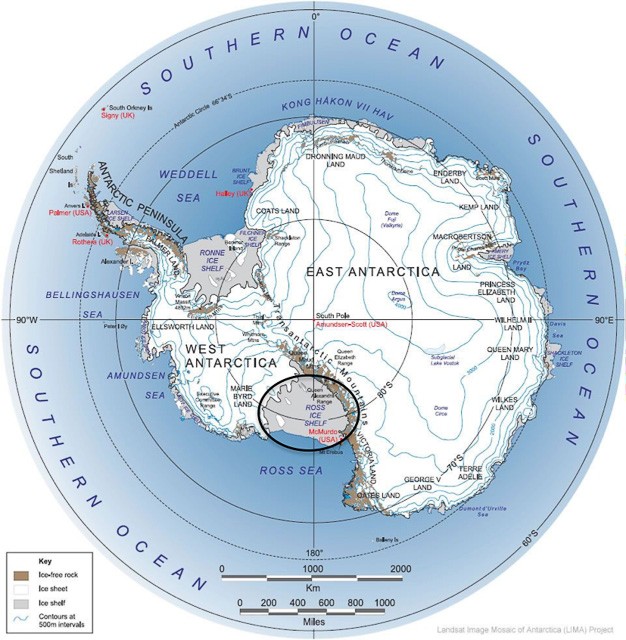
Decentered Listening ~ Ice Vibrations is an immersive sound installation created with seismic data collected from Antarctica. This ongoing performance asks the audience to reconsider their methods of perception by reposing and listening to the Ross Ice Shelf with us.
Listen to the stereo version
A stereo listening version of the work, separate from the video. Open the audio file ↗


Developed with artists and a Scripps oceanographer, the work approaches the ice through sound, shared space, and bodily attention. Scientific recordings become material for a collective encounter with the movements of water and ice.
A different position for listening
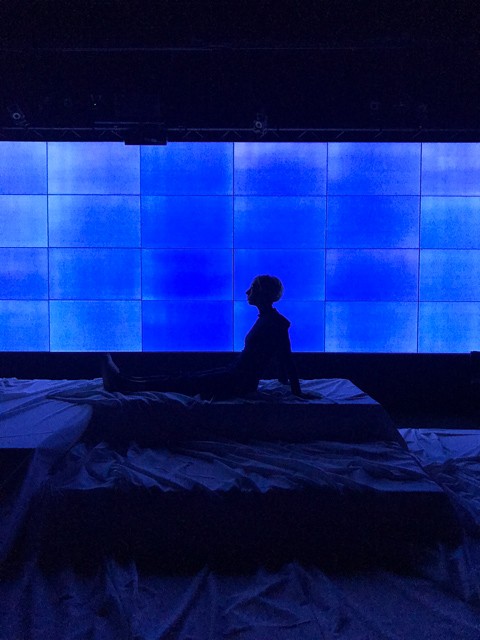
The audience is invited to repose: to recline, pause, and listen together. A room ordinarily organized around a stage becomes a place for resting bodies and sustained attention. Blue light and a field of white-covered surfaces surround the listeners.
The work explores the musical vibrations of the planet, sympathetic vibrations between water and ice, and the Earth–human relationship as a musical instrument. These are artistic propositions: ways of approaching a distant environment through the senses, rather than treating a scientific image as the only route to understanding it.
Waves moving through ice
Scripps Institution of Oceanography researcher Peter Bromirski traveled to Antarctica as part of NSF-supported polar research to record wave signals propagating through the Ross Ice Shelf and investigate the shelf’s integrity. The project draws on those measurements, bringing the movement of ice into human listening.
The installation sonifies data collected on 19 April 2015. Sonification makes data available as sound; here, seismic measurements become the basis for a composed listening experience. This is not simply a microphone recording of what a visitor would have heard standing on the ice.
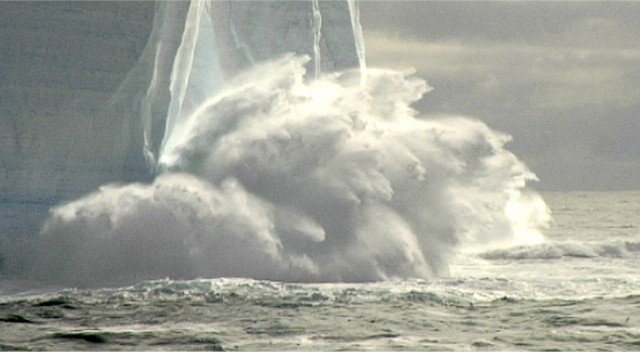
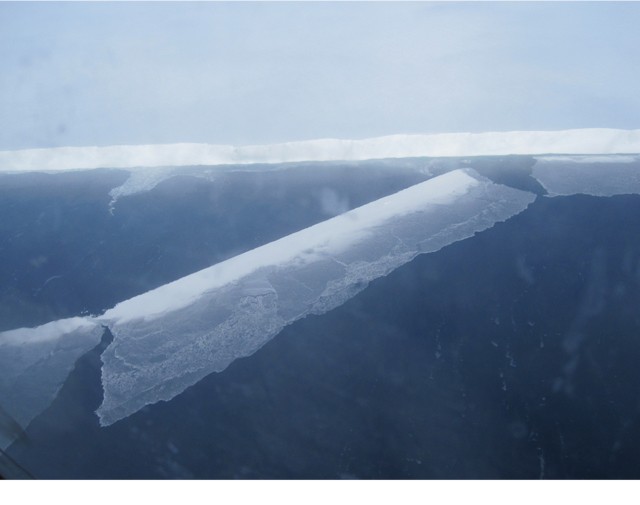
The science and the installation meet through a design question: how can an instrument record become an encounter without losing its connection to the place and process being measured? The translation happens in the sound, but also in the room: how people enter, how they arrange themselves, and how long they remain with what they hear.
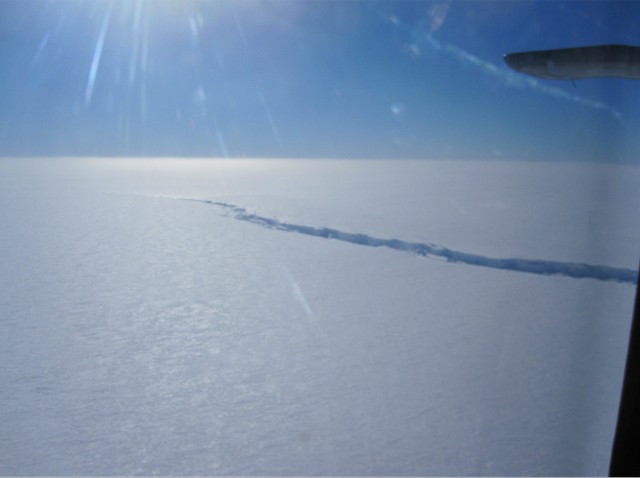
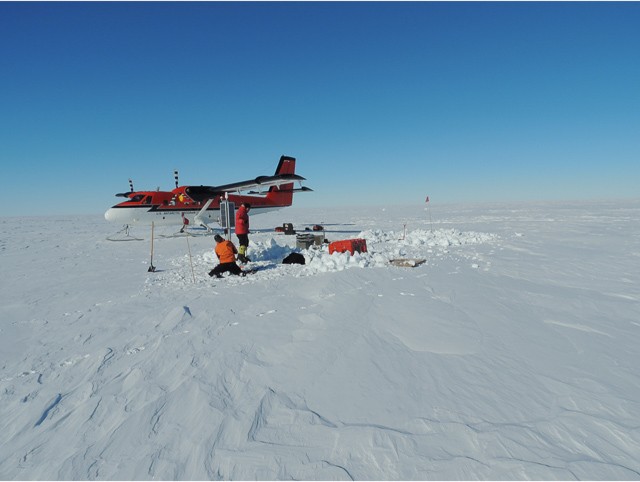
Making the work: sound + Max/MSP
Max/MSP was part of the sound-making process for the installation. Working from the Ross Ice Shelf seismic data, the team developed a sonified composition for shared listening. Sound-making and exhibition design came together in the invitation to repose and listen to the ice.
Presented through Qualcomm Institute’s IDEAS program, the installation also served as research and a prototype for exhibition development with Birch Aquarium at Scripps. It explored what an art–science collaboration could make available through a public, bodily encounter.


Video documentation
Performance photographs
Further views from the existing project gallery. The Calit2 / Qualcomm Institute Flickr album contains 28 photographs of the event.


Birch Aquarium + Scripps: an ongoing collaboration
Ice Vibrations developed during Ash Eliza Smith’s fellowship at Birch Aquarium at Scripps Institution of Oceanography. The fellowship connected artistic research, speculative design, filmmaking, and public engagement with Scripps science.
As inaugural Birch Fellows, Smith and cognitive scientist Nan Renner worked on immersive experiences for the Expedition at Sea: R/V Sally Ride gallery. The aquarium offered a place to test how scientific fieldwork could become an experience shared with the public. Read UC San Diego’s account of the fellowship and gallery ↗
Credits + acknowledgments
- Lead artist
- Ash Eliza Smith
- Collaborating team
- Yuka Murakami
Forest Reid
Peter Bromirski
Glen McClure - Scientific research and data
- Peter Bromirski
Scripps Institution of Oceanography
NSF-supported polar research - Production assistance
- John Abboud
Francesca Moore - Presentation
- IDEAS Performance
Calit2 Theater, Atkinson Hall
Qualcomm Institute, UC San Diego
19 April 2018 - Project support
- Qualcomm Institute’s Initiative for Digital Exploration of Arts and Sciences (IDEAS) Award.
- Development context
- Ash Eliza Smith’s Birch Aquarium fellowship at Scripps Institution of Oceanography, UC San Diego.
- Additional photo archive
- The linked Calit2 / Qualcomm Institute Flickr album credits its photographs to Shanni Jin for the Qualcomm Institute / UC San Diego.
Full 28-photograph album ↗
The original project credits also acknowledge Glen McClure’s participation in the NSF Artists and Writers Program. The scientific field images are retained from the original project documentation.
Documentation + related reading
IDEAS: Deep Listening, Rhythms, Vibrations, and Voices from the Ross Ice Shelf ↗
UC San Diego Today: Birch Fellows and the R/V Sally Ride gallery ↗
Birch Aquarium: Embodied Pacific bridges science and art ↗
Embodied Pacific: exhibition and collaborators ↗